
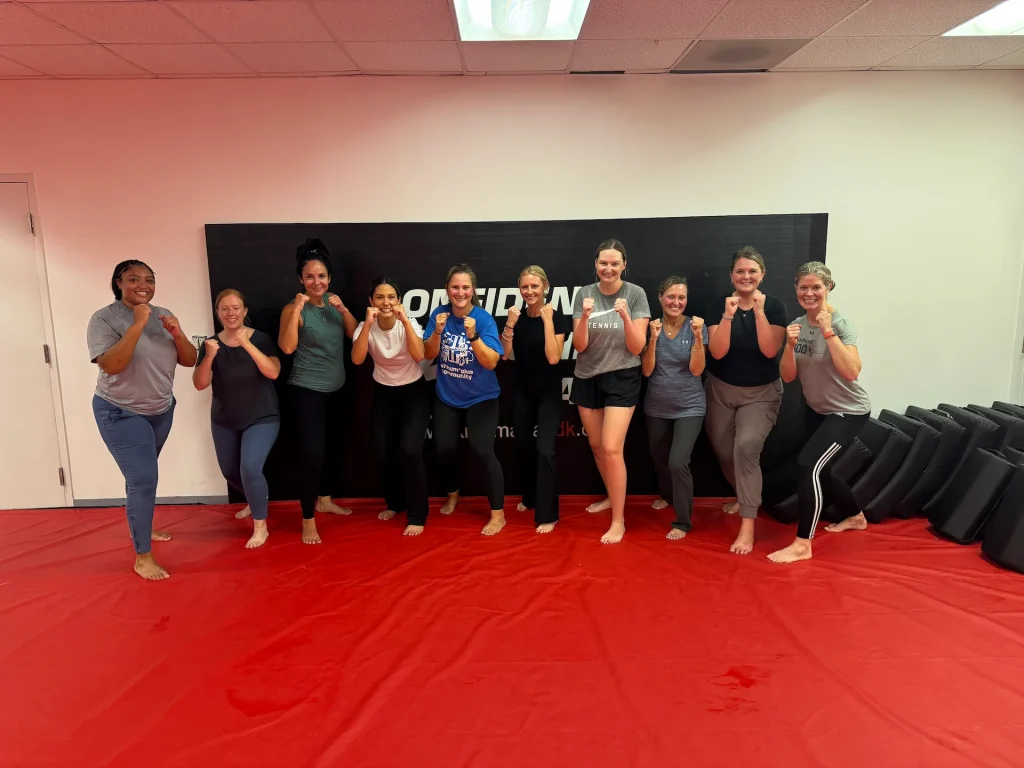

You want to learn how to protect yourself, but walking into a training center can feel like a big first step. Maybe you have never thrown a punch. Maybe you are wondering whether you need to get stronger first, or whether everyone else will already know what they are doing.
You can start learning self-defense without previous martial arts experience. Being a beginner means you need instruction, practice and time to develop your skills. You do not need to arrive knowing how to fight.
If you are considering self-defense classes for women, here are the questions worth working through before you begin.
Do I need martial arts experience to start?
No. Previous training may make some movements familiar, but it is not a requirement for beginning to learn.
Your first task is to understand what the instructor is asking you to do. That might mean learning where to place your feet, how to position your body or how to move through a drill with a partner. It is normal to need a demonstration repeated or to pause and ask a question.
Try not to judge your progress against someone who has been training for months. An experienced student may make a movement look effortless because they have practised it many times. Your starting point is learning the movement and receiving feedback.
Do I need to get fit before taking self-defense classes?
You do not need to treat fitness as a separate project that must be finished before you ask about training. Start by explaining your current activity level and any movement limitations to the instructor, then discuss an appropriate starting point.
Strength and conditioning matter in physical activity, including self-defense. But being fit and knowing how to respond to an attack are different skills. A person who exercises regularly can still be a complete beginner at partner training.
Instead of asking only, “Am I fit enough?”, ask, “How do you help a new student work at an appropriate pace?” The answer should make the next step clearer and give you space to discuss what you need.
What if I am nervous about training with a partner?
Training with another person may be the part that feels least familiar. Before you begin, ask how contact is introduced, how partners are selected and what to do if you need to pause.
At Krav Maga CDK, beginners first practise techniques with a non-resistant training partner. This gives them time to learn mechanics, positioning and control while developing the ability to train safely with another person. Resistance is introduced only after that foundation is in place.
A cooperative partner helps you learn the movement. Later, appropriately introduced resistance presents a different challenge: applying what you have learned when the interaction is less predictable. These are different stages of learning, and you should understand which stage you are working on.
For more about that progression, read our guide to what to expect from a practical self-defense class.
Are women’s self-defense classes always women-only?
The wording alone does not tell you the class format. When comparing options, ask whether the training takes place in a women-only group, a mixed class, a workshop or a private session.
Also ask who you will practise with and how the instructor manages differences in experience. These details can help you decide whether a particular setting fits your goals and comfort level.
You can ask CDK about the current training arrangements when you enquire about women’s self-defense training in Bethesda.
What should I expect to achieve as a beginner?
Look for specific signs of learning: you understand an instruction more quickly, need fewer reminders about your positioning or perform a familiar drill with better control. Those are useful steps even when you still have plenty to practise.
Avoid measuring readiness by a fixed number of classes. Understanding a demonstration, repeating a movement with a cooperative partner and applying a skill under pressure are different demands. Progress takes practice, and no class can guarantee the outcome of a real confrontation.
CDK’s primary training focus is preparing students to respond when a fight cannot be avoided. Awareness and de-escalation may be touched on, but the emphasis is on developing a physical response when prevention is no longer enough, with the aim of creating an opportunity to disengage and get away when possible.
What should I ask before signing up?
A conversation with the school should help you understand both the training and the practical commitment. Useful questions include:
- Which class is appropriate for someone with no experience?
- How do you introduce partner practice and contact?
- What clothing or equipment will I need, and what is provided?
- What schedule can I realistically follow?
- What are the fees and membership terms?
Ask these questions before buying equipment or assuming that a particular class format is available. Clear answers make it easier to choose a program you can attend consistently.
Starting women’s self-defense training in Bethesda
You do not have to resolve every concern before contacting a school. The introductory conversation is a place to explain your goals, say that you are new and ask how to begin.
Krav Maga CDK offers a consultation to discuss your goals and how its program may fit. To take the next step, request a consultation.
Bring your questions. Learning starts with finding out what is right for your starting point.