
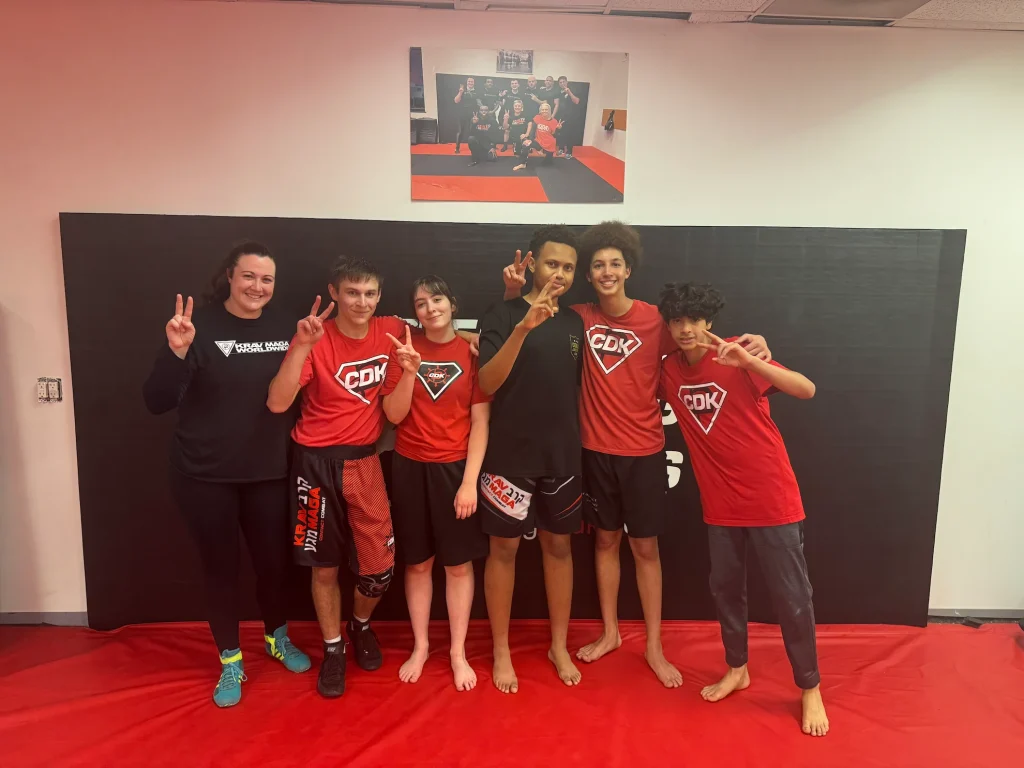

As teenagers become more independent, they spend more time navigating situations without a parent beside them. Walking somewhere with friends, attending activities or starting a part-time job can bring a practical question into focus: would they know how to respond if someone became physically threatening?
Self-defense classes for teens offer a place to begin developing those skills through instruction and practice. For parents, understanding how that training works matters as much as the decision to start.
The aim is to help a teenager become more capable and responsible—not to promise that they can handle every confrontation.
What do teens learn in self-defense training?
Physical self-defense involves more than knowing a few movements. Students need to learn positioning, movement, control and how to respond while another person is involved.
A beginner may understand a demonstration but still need repeated practice to perform the movement. Coaching helps them recognize mistakes, make adjustments and gradually build familiarity.
At Krav Maga CDK, the primary focus is preparing students to respond when a fight cannot be avoided. Awareness, avoidance and de-escalation are supporting topics. Physical training addresses what happens when prevention is no longer enough, with the aim of creating an opportunity to disengage and get away when possible.
For a teenager, an important part of learning is understanding the purpose of that practice. Training is preparation for protecting themselves, not an invitation to test techniques on friends or settle disagreements physically.
How are contact and partner practice introduced?
It is reasonable for parents to wonder how a new student will practice physical skills without being pushed into something they cannot yet manage.
CDK’s approach begins with a non-resistant training partner. This allows beginners to learn mechanics, positioning and control while developing the ability to train safely with another person. Resistance is introduced only after that foundation is established.
Cooperative practice and practice against resistance serve different purposes. The first helps students understand the movement. Later progression challenges them to apply what they have learned as the interaction becomes less predictable.
Following instructions, controlling movements and respecting a partner are part of the learning process. Progress should involve becoming a more reliable training partner as well as improving individual skills.
Our guide to the principles of practical self-defense training explains this progression in more detail.
Does learning self-defense encourage teens to fight?
Learning physical skills should come with a clear understanding of when they are appropriate.
An argument, an insult and an unavoidable physical attack are different situations. Self-defense training should reinforce that knowing a technique does not make using it the right response to every conflict.
CDK’s teen program emphasizes respect and discipline alongside realistic self-defense skills. Those expectations matter during practice: students need to listen, follow instructions and treat their partners responsibly.
If bullying is the reason a family is considering training, it is important to address the situation with the school and trusted adults as well. A teenager should not be left responsible for solving ongoing bullying through physical ability alone.
What if my teenager is shy or has never trained?
A teenager does not need to arrive feeling confident about an unfamiliar activity.
Being hesitant, asking questions or needing a demonstration repeated are normal parts of learning. Some students are comfortable joining a group immediately; others need time to become familiar with the instructor, their training partners and the routine.
Involve your teenager in the conversation about starting. Find out what interests them and what worries them. They may be concerned about contact, making mistakes in front of other students or being expected to keep up with someone more experienced.
Sharing those concerns before the trial class gives the instructor useful information. It also gives your teenager a voice in the process.
What does regular training add beyond a workshop?
A workshop can introduce ideas and provide an opportunity to practice. Regular classes provide further opportunities to revisit those skills, receive feedback and work through difficulties.
Remembering what an instructor demonstrated is different from performing it consistently. Ongoing practice gives students time to develop coordination and control, then apply those foundations as training progresses.
There is no universal number of classes that makes a teenager ready for every situation. Useful signs of progress are more specific: following instructions with fewer reminders, maintaining better positioning and working with a partner more carefully.
Although the teen class meets once a week, CDK has seen meaningful improvements in students’ confidence and presence through consistent participation.
How do class format and schedule affect getting started?
At Krav Maga CDK, teens train in a dedicated class separate from adults. The teen class meets on Saturdays from 10:00 to 11:00 a.m., giving students a group designed for teen training while keeping the class separate from the adult program.
New students can begin by trying a class. This gives the teenager and their parent an opportunity to experience the instruction, group setting and training environment before deciding whether ongoing classes are the right fit.
Starting teen self-defense training in Bethesda
Krav Maga CDK’s Teen Krav Maga program in Bethesda combines realistic self-defense training with an emphasis on respect, discipline and physical fitness.
Families considering the program can start with a trial class. This allows a teenager to experience the instruction, group setting and training environment before deciding whether ongoing classes are the right fit.
Contact Krav Maga CDK to ask about trying the Saturday teen class.